Character Sheets
Armour class, saving throws, skill totals, attack bonuses, spell DCs — none of it is typed in. The sheet derives it from your class, ancestry, feats, gear and active effects, and re-derives it the moment any of those change. When a total looks wrong you can open it up and see which bonuses built it.
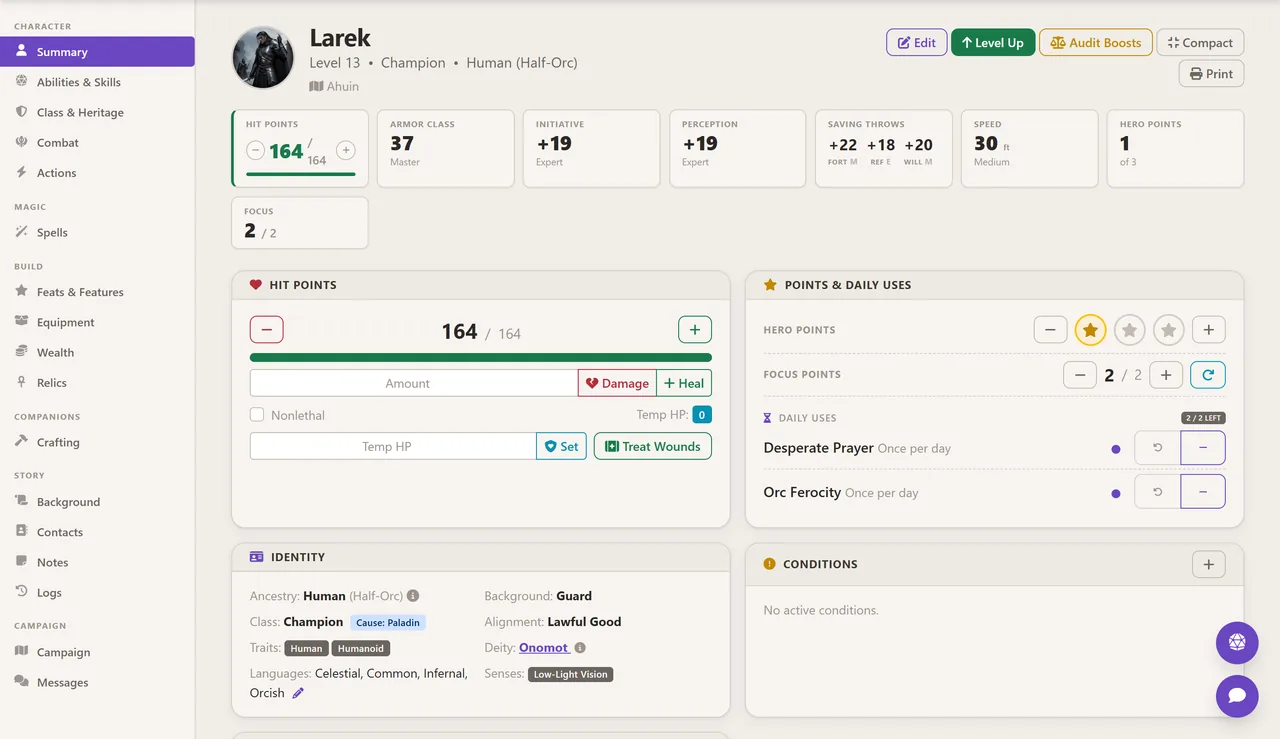
- Derived stats recalculated live
- Bonus breakdowns on the totals that matter
- Separate Pathfinder 1e and 2e sheets
- Print layout and PDF export
- Compact view for small screens
The numbers keep themselves
Swap a weapon, take a feat, put on different armour, or apply a condition, and every total that depends on it moves in the same action. There is no recalculate button because there is nothing to recalculate by hand.
- Ability scores, proficiency and item bonuses resolved together
- Pathfinder 1e's typed bonus stacking applied the way the rules define it
- Pathfinder 2e's proficiency ladder and item bonuses worked out per statistic
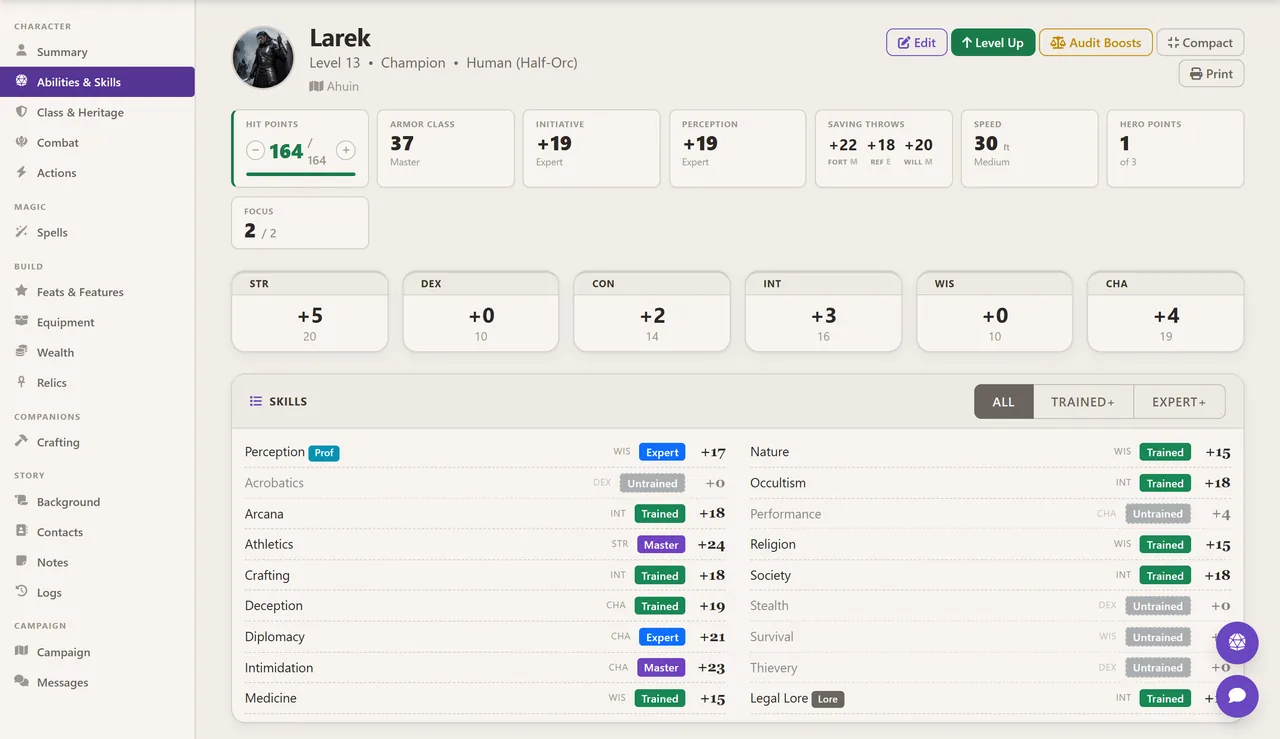
Combat maths, shown not asserted
The combat tab breaks armour class down into its base, dexterity, proficiency, armour and item parts, and lists each strike with its full attack sequence, damage, traits and the critical effect that applies. Saving throws show their successes and critical successes rather than leaving you to remember them.
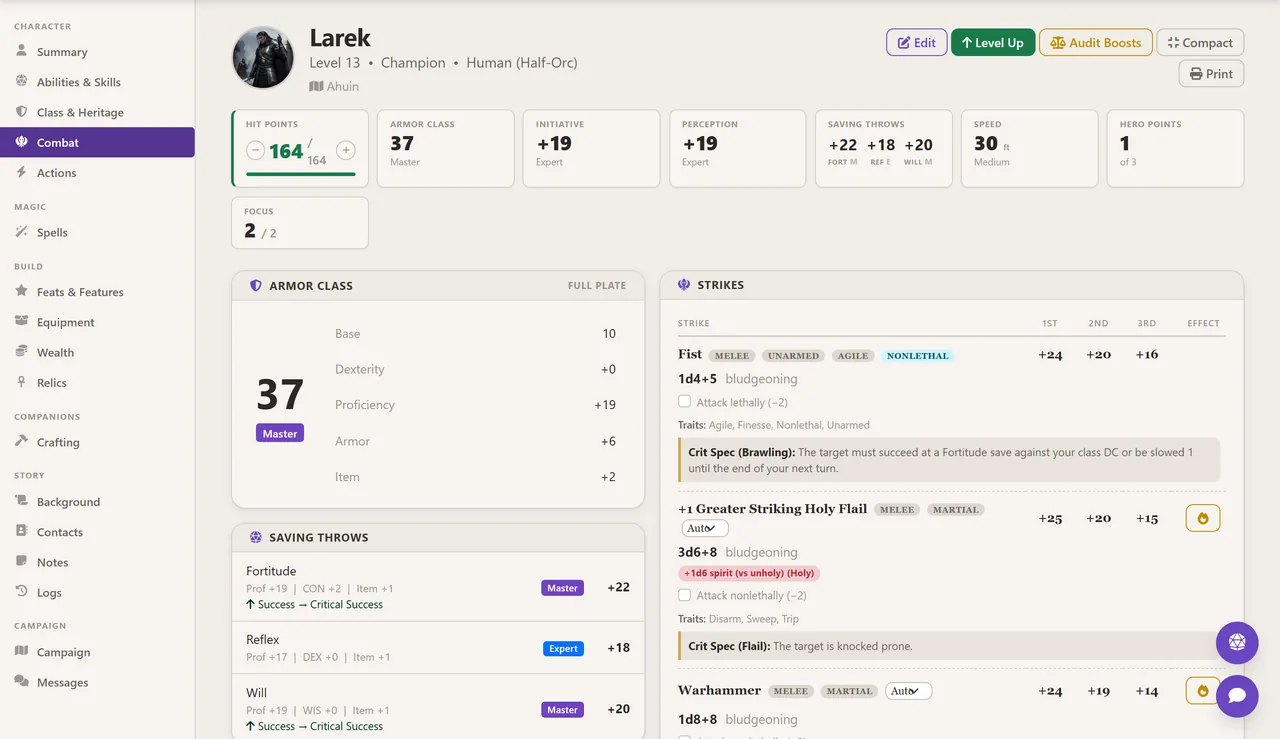
The whole build, in one place
Ancestry, class, skill, general, archetype and bonus feats are grouped by where they came from and colour-marked by the level they were taken at, so you can see what your character actually has — and what still needs a choice made.
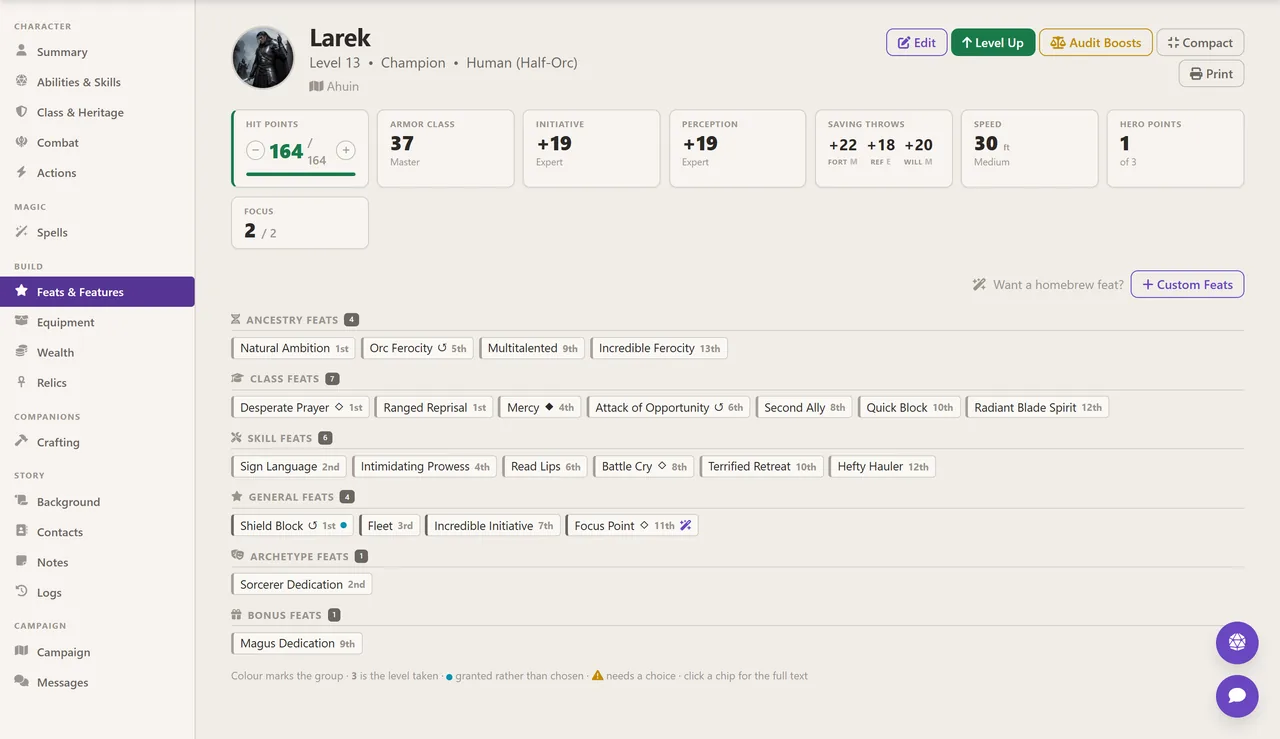
Spells where you cast from
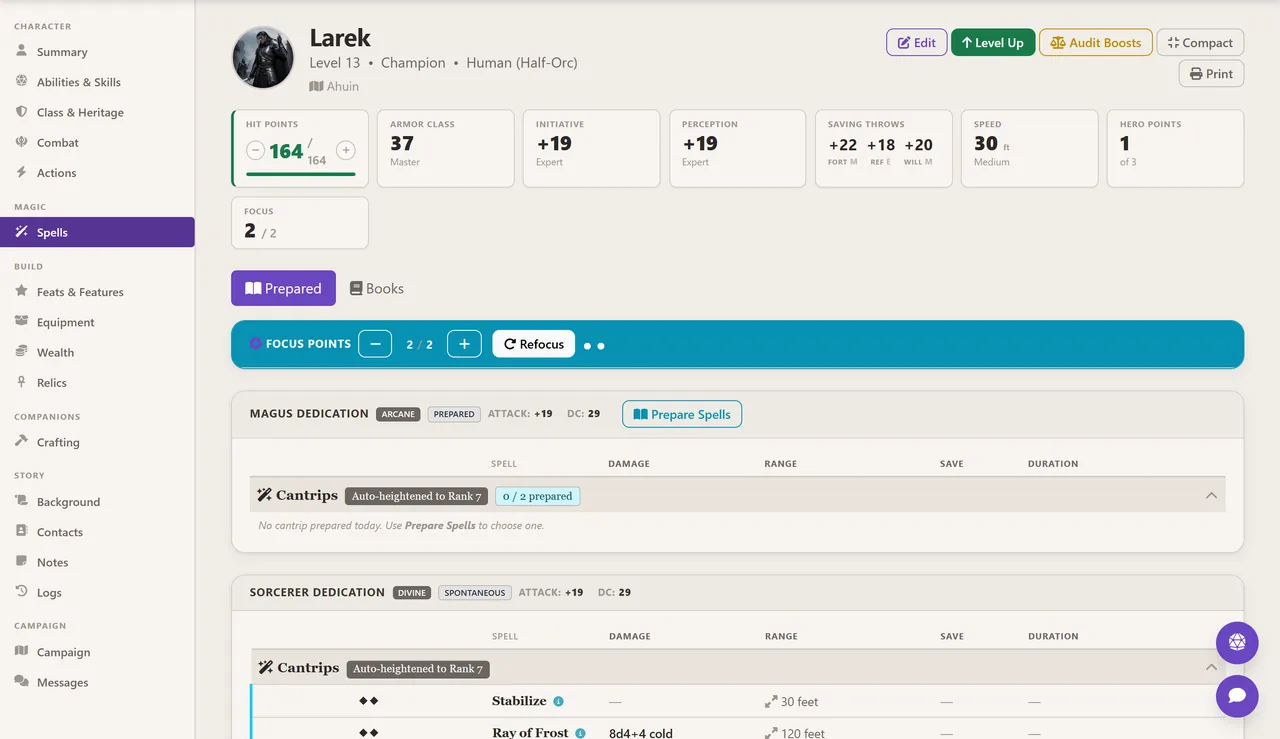
Prepared and spontaneous casting each get the interface they need. Focus points and refocus are tracked on the sheet, cantrips are auto-heightened to the right rank, and archetype spellcasting appears as its own tradition rather than being folded into your class list.
Gear that carries its own weight
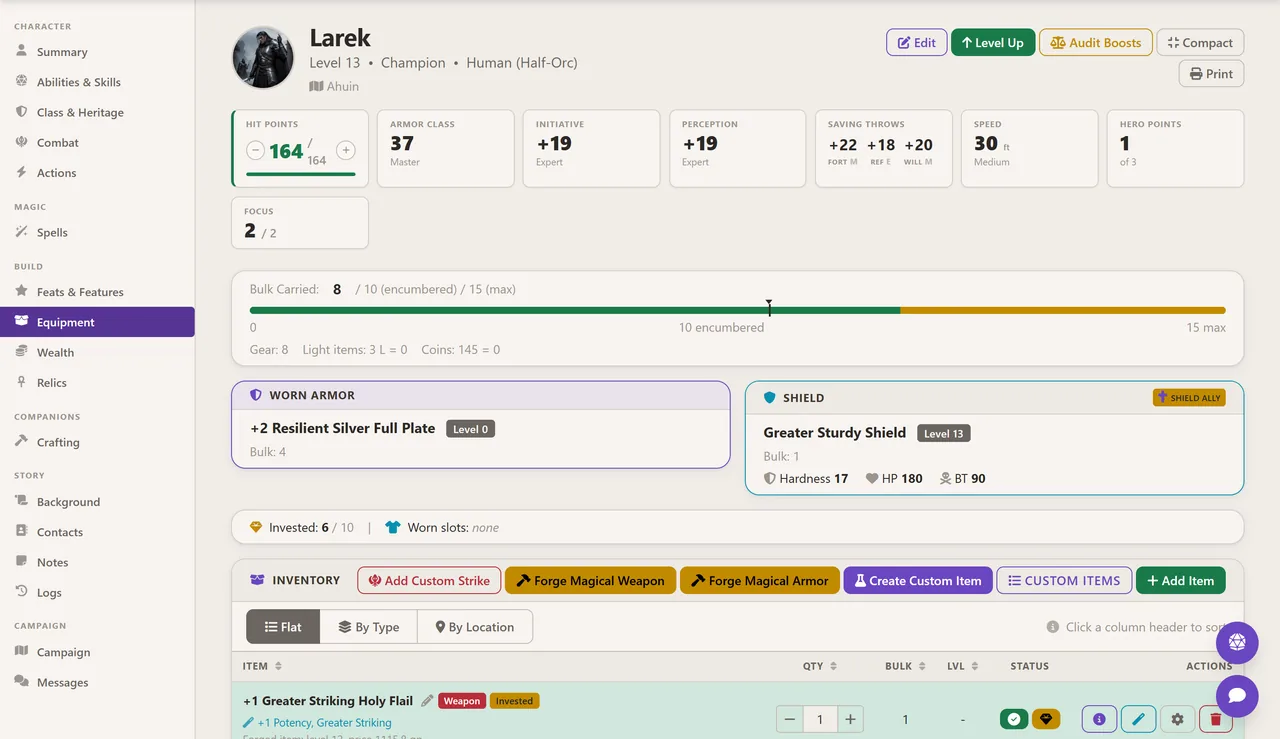
Equipment tracks bulk and encumbrance as you add it, along with invested items, worn slots, runes, and shield hardness and hit points. Custom items and custom feats cover the cases the published lists do not.
- Bulk and encumbrance recalculated as you add gear
- Invested items and worn slots tracked against their limits
- Custom items and feats when the published lists fall short
Both editions, on their own terms
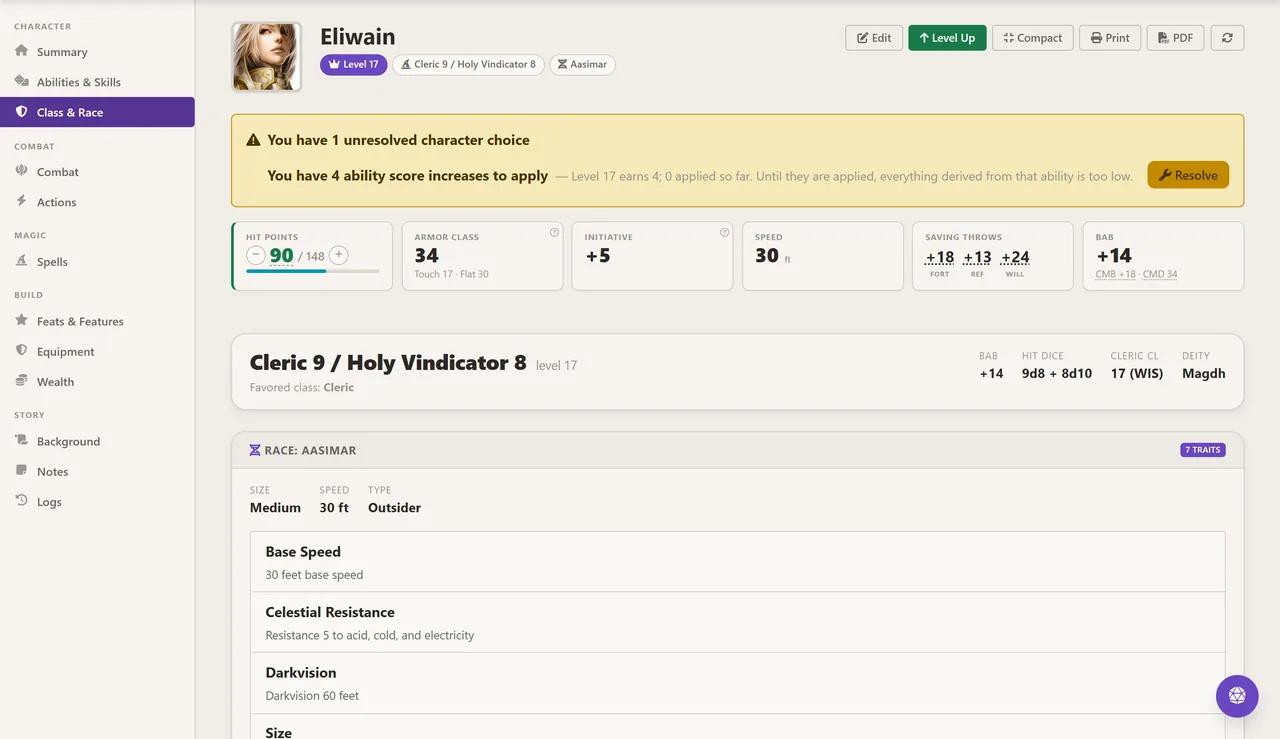
Pathfinder 1e is not Pathfinder 2e with different labels. It gets its own sheet, its own tabs and its own rules engine — multiclassing, prestige classes, archetypes that trade away the features they are supposed to, and racial traits that actually do something.
Take it off the screen
Every sheet has a printer-friendly layout and a PDF export for the players who want paper at the table, plus a compact view for a second monitor or a phone propped against the dice tray.
Try it on a real character
The free plan is a real plan, not a trial — build a character and see whether it earns a place at your table.