Effects & Conditions
Buffs and conditions are the most commonly dropped piece of bookkeeping at a table, because they change several numbers at once and then quietly stop. Apply one here and the sheet moves; let the duration run out and it moves back.
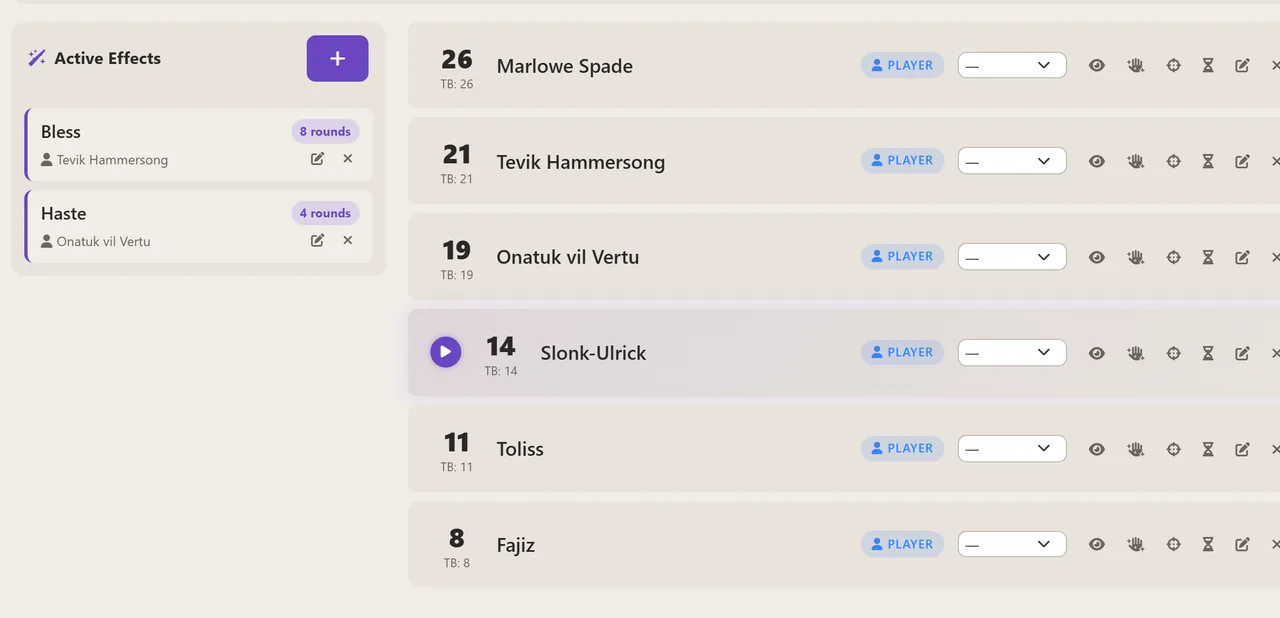
- Effects feed the real calculation pipeline
- Round-based durations that expire on their own
- Published conditions applied by name
- Typed stacking resolved by each edition's rules
- Effects shown on the shared table display
Durations count themselves down
Give an effect a duration in rounds and it decrements as you advance the turn, then removes itself. Nobody discovers at the end of the fight that the Haste ran out four rounds ago.
- Rounds, minutes or hours, or until you remove it
- Concentration and dismissible effects marked as such
- Effects shown to the whole table on the shared initiative display
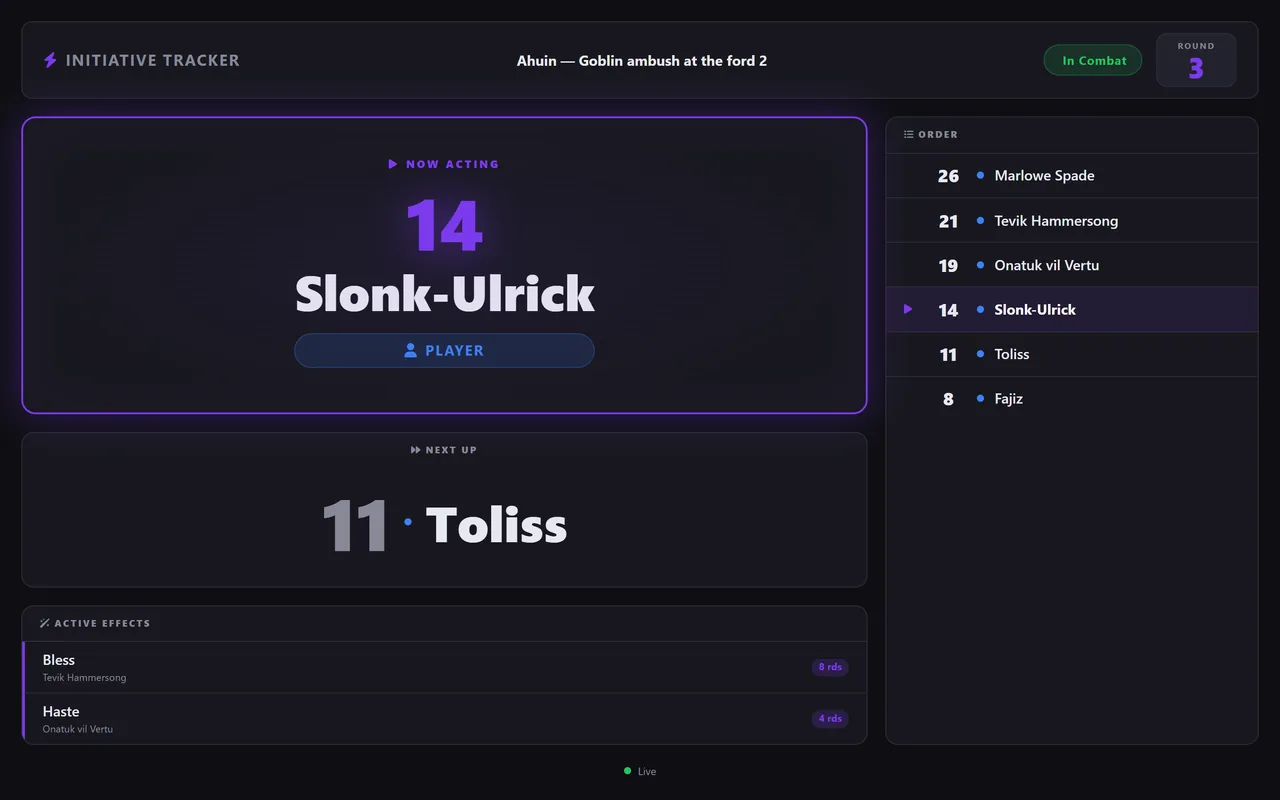
Apply conditions by name
The published conditions are there to pick from, so Frightened 2 or Clumsy 1 is a choice from a list rather than a note to yourself — on the sheet and on each combatant in the initiative tracker.
The totals actually change
This is the part that matters. An effect is not a label — it feeds the same calculation pipeline as your gear and feats, so armour class, attack bonuses, saves, Perception, skills and speed all reflect it, on both editions. Put Shield of Faith on a Pathfinder 1e cleric and their armour class goes up by two.
Stacking resolved by the rules
Neither edition simply adds bonuses up. Pathfinder 1e distinguishes types that stack from types that take the highest — dodge and circumstance stack, deflection and enhancement do not. Pathfinder 2e takes the highest circumstance, item and status bonus separately, and the worst penalty of each type. Both are applied for you, which is most of why armour class arguments happen at all.
Try it on a real character
The free plan is a real plan, not a trial — build a character and see whether it earns a place at your table.